The legendary American band Creedence Clearwater Revival holds a special place of honor in the history of the global music industry. Without the unique creativity of these celebrated artists, it is simply impossible to imagine the development of modern popular music. Reputable experts and critics regularly note the band's colossal contribution to the formation of classic rock. At the same time, this distinctive group remains beloved by millions of devoted listeners across generations. While not exquisite musical virtuosos, these charismatic musicians were able to create truly brilliant works of art. All of their famous songs possessed amazing inner energy, powerful drive, and stunning melody.
A relatable theme has always run through the iconic work of Creedence Clearwater Revival. The musicians passionately explored the difficult lives of ordinary, honest workers in the American South in their verses. Through their laconic, poetic lyrics, the band also boldly addressed pressing social and political issues. The dense guitar work, coupled with the magnificent, signature vocals of frontman John Fogerty, literally captivated enthusiastic listeners. In the short five years of their active existence, the band released seven full-length albums, selling a whopping 120 million copies.

The early stages of the formation of the legendary rock quartet
Back in the late 1950s, three school friends from the California suburb of El Cerrito made a momentous decision. Teenagers John Fogerty, Doug Clifford, and Stu Cook formed an amateur band, The Blue Velvets. Initially, the young men earned modest income performing at local farmers' markets. The budding musicians also busked at parties and worked as accompanists in recording studios.
Meanwhile, Tom Fogerty, the band's leader's older brother, was touring the bar circuit on his own during this same period. The creative young man sang and played in rock bands like The Playboys and Spider Webb and the Insects. The experienced guitarist occasionally volunteered to help his younger brother's band at holiday concerts. After some time, the talented artist permanently joined The Blue Velvets. From that moment on, their backyard group officially transformed into a promising quartet.
Soon, the reformed family band began performing under the new name Tommy Fogerty and the Blue Velvets. After signing their first contract with the independent label Fantasy Records, management changed the name. A music producer persuaded the guys to call themselves The Golliwogs, after a children's book character. For this project, John Fogerty began playing electric guitar and performing lead vocals.
His older brother, Tom Fogerty, took over the primary duties of rhythm guitar. The talented Stu Cook decided to switch from complex piano to the tight electric bass. Drummer Doug Clifford remained reliably responsible for creating rhythmic patterns on the drum kit. The youngest brother independently composed original songs, which expanded almost the entire band's repertoire. Unfortunately, none of the young band's early singles achieved any success.
Military service and the long-awaited revival of the quartet
In 1966, talented musicians John Fogerty and Doug Clifford officially enlisted in the U.S. Army. Due to this unexpected event, the young band was unable to perform live for six months. After their triumphant return from service, seasoned businessman Saul Zaentz decided to take the rock band's affairs seriously. This ambitious entrepreneur had just fully acquired the independent record label Fantasy Records. The first thing the new quartet did was make a firm decision to radically change their old, outdated name.
The band members considered numerous options for a long time until they came up with a complex, multi-layered word structure. The result was the famous name Creedence Clearwater Revival, composed of several random concepts. The musicians borrowed the first word from the name of a close friend of Tom Fogerty's older brother. The remaining elements symbolized pure water and the long-awaited spiritual rebirth of their creative union. Soon, the mature performers officially signed a new long-term contract with the management of the revived Fantasy Records for seven years.
This standard agreement at the time proved to be a real financial pitfall for the young artists. Using cunning legal maneuvers, the wily label owners could easily manipulate the band and even fire them. Nevertheless, the band initially made a splash across the country with their debut single, "Susie Q." This driving track was a cover of an old 1957 hit by renowned songwriter Dale Hawkins. Riding the wave of local success, the rock band Creedence Clearwater Revival promptly released their first full-length studio album.
The long-awaited debut album was officially released to the American public in the summer of 1968. The album immediately gained enormous popularity on many major radio stations, which actively played the new songs. Listeners were particularly enthralled by the powerful studio numbers "I Put a Spell on You" and "Susie Q." To build on this resounding success, the ambitious Creedence Clearwater Revival team immediately embarked on a massive concert tour across the United States. The musicians immediately received rave reviews from leading industry journalists.
The creative triumph of Creedence Clearwater Revival's album Bayou Country
Not content to rest on their laurels, the celebrated band immediately began preparations for their second album. The group spent the summer and fall of 1968 rehearsing, constantly reinforcing their studio training with live performances. John Fogerty wrote the new songs and produced the material exclusively. And he did a superb job. The long-awaited album, Bayou Country, officially hit record stores in early 1969. Its signature sound continued to be dominated by a blend of blues-rock, rockabilly, and rhythm and blues.
The two lead tracks of this release were the iconic compositions "Born On The Bayou" and "Proud Mary." The latter hit, released as a standalone single, reached number two on the prestigious American chart. Critics and the general public alike enthusiastically received Creedence Clearwater Revival's latest studio effort. The resounding success of their second album sealed the band's future. The band immediately became incredibly sought after by renowned concert promoters and actively participated in major festivals. Soon, the band was invited to the renowned Woodstock rock festival as the main headliners of the massive event.
However, at the legendary festival, the musicians encountered unexpected organizational difficulties. The renowned rock band the Grateful Dead extended their live set until nearly midnight. Due to this protracted scheduling glitch, Creedence Clearwater Revival was forced to perform late into the night. By that time, most of the tired audience on the field were already fast asleep. Frontman John Fogerty was extremely dissatisfied with the quality of the night's sound and the atmosphere in the hall. The musicians even categorically refused to include their recordings in the official documentary.
Ultimately, the band reaped no significant dividends from these three days of peace and music. However, this localized setback had no impact on the band's overall popularity. Creedence Clearwater Revival's albums continued to sell at breakneck speed across all global markets. The now-mature band proved their ability to create timeless hits without the heavy promotional support of film. This period undoubtedly marked the beginning of a golden era in the Californian rock quartet's career.
The golden era of releases and Creedence Clearwater Revival's rivalry with world legends
Growing popularity didn't change the Californian boys' lifestyle at all. The musicians continued to live modestly in their hometown of El Cerrito and cherished family values. They also painstakingly worked in an abandoned industrial facility. In the spring of 1969, the rock band Creedence Clearwater Revival quickly recorded their third album, Green River. The record took just a week to complete, but the speed didn't compromise its quality. Frontman John Fogerty later told reporters that he considered this recording his favorite.
Willy and the Poor Boys' next concept album, "Willy and the Poor Boys," was recorded by the musicians from the perspective of a fictitious band. The project centered on blues standards and poignant songs on current issues. The lyrics criticized protracted military conflicts and the harsh social policies of the US government. The new work received top praise from the respected music publication Rolling Stone. Soon, the successful Creedence Clearwater Revival earned the honorary title of Best American Group of the Year. The quartet could now compete on equal terms with The Beatles , The Rolling Stones , and Led Zeppelin.
Cosmo's Factory's fifth studio album was rushed to release, but it turned out to be a stunning work. It was officially released in the summer of 1970, with an initial run of three million copies. Over time, this iconic recording earned the prestigious quadruple platinum status. Experts unanimously noted the significantly enriched sound palette on the new disc. Listeners were pleasantly surprised by the arrangements, which included keyboards, slide guitar, and saxophone. The rockers enjoyed tremendous success on both sides of the Atlantic.
The public was particularly fond of such timeless, dynamic tracks as "Travelin' Band" and "Lookin' Out My Back Door." Rolling Stone magazine later named this masterpiece one of the best albums of all time. The members of Creedence Clearwater Revival were at the peak of their commercial form. However, behind the facade of immense success, the first serious internal discord was already brewing. The musicians were tired of their leader's total control and demanded greater creative freedom in the studio.
The decline and official breakup of the rock band Creedence Clearwater Revival
When the press began describing Creedence Clearwater Revival as a pop band, frontman John Fogerty decided to produce a true heavy rock album. For the first time in their history, the band worked longer than usual on the recording. The musicians spent a full month in the studio instead of their usual half-week. Almost all the new songs were carefully honed during rehearsals. As a result, Pendulum's new instrumental album is truly diverse and near-perfect in terms of production quality.
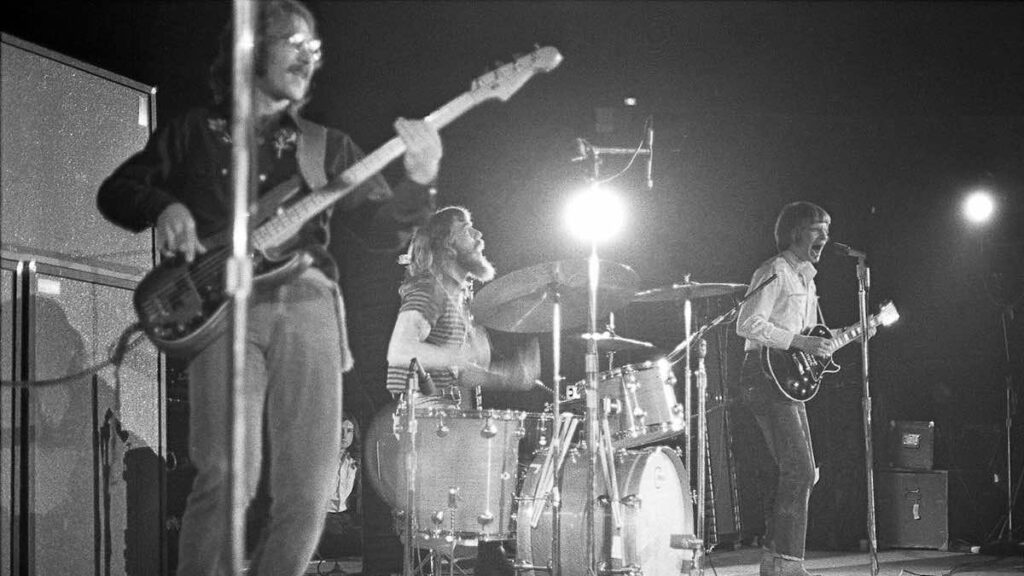
Pre-orders for the new album from wholesale stores immediately exceeded one million copies. As a result, the iconic disc officially went platinum long before its official release. However, within the renowned band Creedence Clearwater Revival, long-standing, serious creative differences suddenly flared up. In early 1971, due to the leader's harsh, dictatorial methods, the band's older brother, Tom Fogerty, left the band for good.
The remaining musicians were forced to record their very last studio album, Mardi Gras, as a trio. This time, John Fogerty gave his colleagues complete freedom to write songs. Unfortunately, respected American critics immediately called this release the worst in the renowned group's extensive repertoire. Loyal listeners were also extremely reluctant to buy the final disc due to the lack of the usual standout hits. The internal crisis finally destroyed the solid foundation of the legendary Californian band.

In October 1972, the renowned band Creedence Clearwater Revival officially announced its disbandment to fans. The musicians went their separate ways and began developing solo projects. A tragic end to the band's history came with the untimely death of Tom Fogerty from a serious illness in the fall of 1990. The former bandmates were never able to reconcile for a long-awaited reunion on the big stage. To this day, in 2026, the band remains a towering monument to the classic era of American rock 'n' roll.