The name of the group Dire Straits can be translated into Russian in any way - "Desperate situation", "Constrained circumstances", "Difficult situation", in any case, the phrase is not encouraging.

Meanwhile, the guys, having come up with such a name for themselves, turned out to be not superstitious people, and, apparently, that is why their career was set.
At least in the eighties, the ensemble became one of the most significant and commercially successful in the history of modern music.
In 1977, two British boys, brothers Mark and David Knopfler, invited their friends John Illsley and Peak Withers to start playing music together.
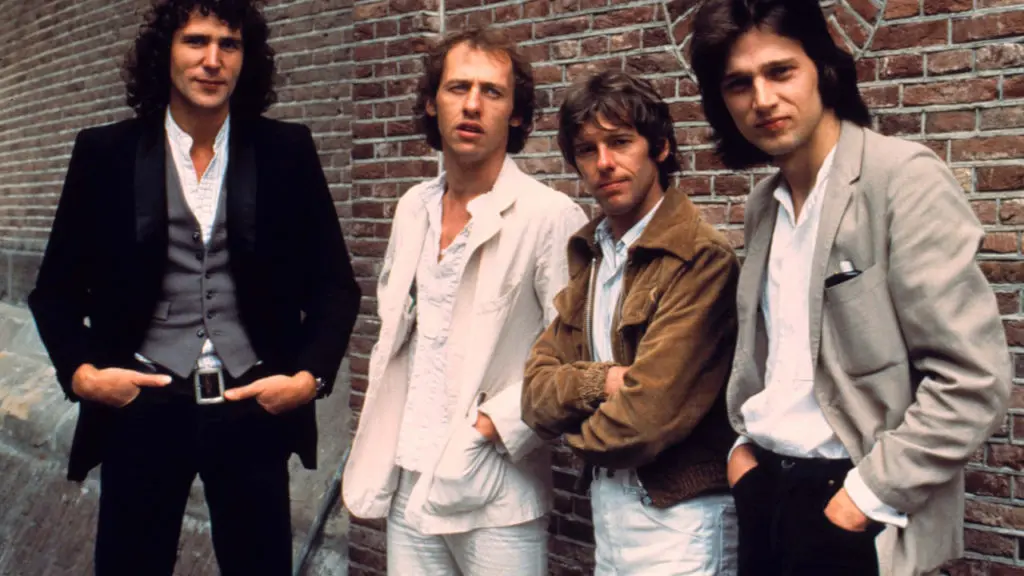
Relatives took up the guitars, John got the bass player, and Peak sat down at the drum kit. In this composition, they began to rehearse, honing their performing skills.
The basis of the group's repertoire was the songs of the talented Mark Knopfler in the style of blues-rock interspersed with country, rock and roll and jazz. And these melancholy-thoughtful compositions became a worthy answer to the sparkling and impudent punk rock that was gaining momentum at that time.
In the early stages of the Dire Straits
The depressing but ironic and phonetically euphonious name Dire Straits was proposed by an outside musician who at the time lived in the same room as drummer Withers.
At that time, the guys were really experiencing financial difficulties, they were “aground”, so the name for the group fit perfectly.
In the first year of its existence, the Knopflers and associates recorded a pilot cassette, which included five songs, including the future hit Sultans of Swing, and offered to listen to the opuses of a familiar BBC radio host, Charlie Gillette.
Charlie Gillette was so impressed by what he heard that he immediately put "The Sultans" on the air. The song went to the people, and a couple of months later the group was already signing a contract with Phonogram Records.
The debut album was recorded in the capital's Basing Street studio. They worked throughout February 1978, spent more than 12 thousand pounds sterling on recording, but they did not manage to extract special dividends for their work.
The record was poorly advertised, critics and the public reacted to the release sluggishly. However, at the same time, Dire Straits began an active concert activity, performing in joint concerts with the growing Talking Heads.
The Americans from Warner Bros. drew attention to the British. Records, which released the debut album in the US and distributed it almost all over the world.
Country rock from London has conquered not only picky Americans, but also more complacent Canadians, Australians and New Zealanders. This work was well received in Europe.
In 79, the guys made a big tour of the North American continent, where they played fifty performances in a month in packed halls.
The legendary Bob Dylan visited their concert in Los Angeles, was impressed by the performance and invited Mark Knopfler and Peak Withers to record their own album Slow Train Coming.
The recording of the second disc, called Communique Dire Straits, began at the end of 78 in the Bahamas. It was released in the summer of 79 and secured the first line of the German charts.
The composition Lady Writer was released as a single. The album continued to cultivate the same line that developed on the first. Musically and textually, the work turned out to be more perfect, but still with the same “monochrome” sound.
Music and line-up changes
In July 80, the group began work on the third disc and completed it by the fall. During the recording process, the Knopfler brothers had a lot of conflict with each other.
Mark insisted on expanding the musical palette, and David believed that the ensemble needed to develop the old vein that brought him relative success.
In the end, David left Dire Straits with a bang, so much so that his participation in Making Movies was not even mentioned on the record sleeve, rhythm guitar parts were added by another musician.
The band went on tour with two new members: keyboardist Alan Clark and guitarist Hal Lindes.
Making Movies differed from the previous works of Dire Straits by its art-rock twist, the complexity of the arrangements and the length of the compositions, which became the hallmark of the group in the future.
The rhyming personal experiences of Mark Knopfler, a philologist by education, formed the basis of the album's lyrics. The most successful song from this album was Romeo and Juliet, which tells about unrequited love almost according to Shakespeare.
The next studio masterpiece of the group Love over Gold is considered, if not the best, then one of ... in their discography.
The skill of the musicians reached its peak, and the lengthy rock suites delighted with the sophistication and variety of arranging solutions. The experiment was a success.
In the autumn of 1982, the album was certified gold in the States and climbed high in many European charts.
At the height of perestroika, even the Soviet recording company Melodiya released this wonderful record in the USSR, without cuts and with the original front cover design!
Unless the name of the group and the disc itself was typed in Cyrillic - “Love is more expensive than gold”, and the leader of the group appeared under the name Knopfler - the translators were confused by the letter “key” at the beginning of the English spelling.
It is noteworthy that this album was completely produced by Mark himself and contained only five songs - two on the first side, and three on the second.
The initial piece Telegraph Road lasts more than 14 minutes, but the melodic pattern, tempo, and mood change several times in it, which is listened to in one breath.
Peak Withers left the band shortly after the album's release. He was replaced by drummer Terry Williams. With this guy in the composition, a double live album Alchemy: Dire Straits Live was recorded.
It was released not only on vinyl, but also on a CD that was gaining popularity.
Brothers in Arms
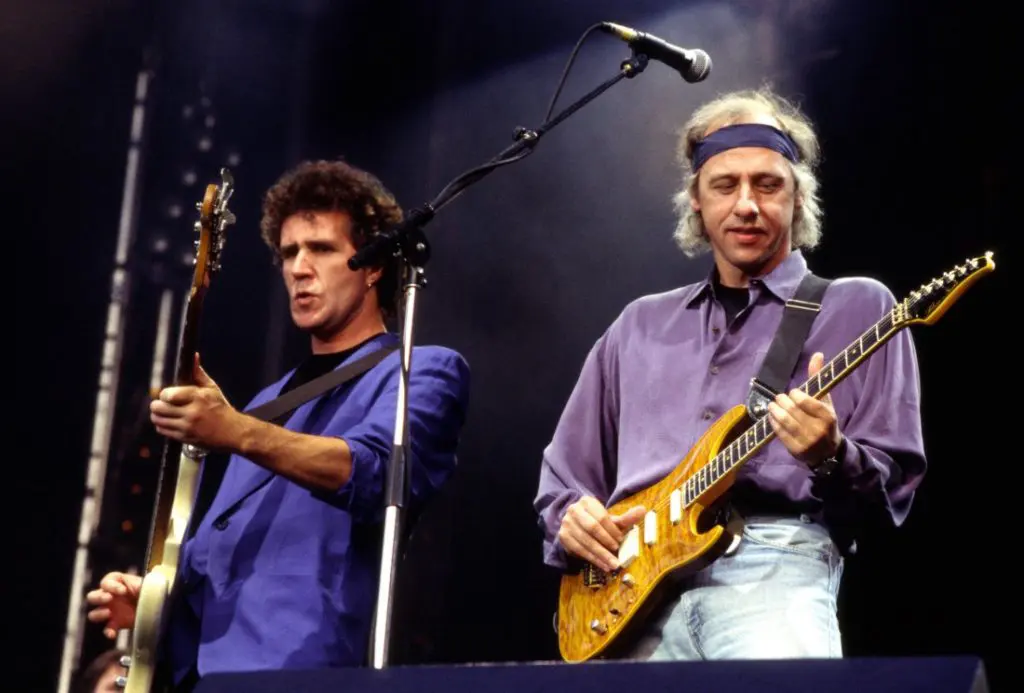
Before the new 1984 Dire Straits returned to the studio to record a new, fifth album. Subsequently, it was called the most significant disc in the treasury of the team itself, and of the whole decade.
By that time, additional organist Guy Fletcher from Roxy Music had joined the band, guitarist Hal Lindes left, and American Jack Sonny was recruited out of state to replace him.
Terry Williams stayed on mainly for music videos and concerts, and in the studio the drums were entrusted to jazz drummer Omar Hakim.
Remember the intro to Money for Nothing, where before the famous guitar break, the synth shaft and drum pounding build up - and so the percussion is just violently broken by Williams.
The miracle record appeared in the spring of 1985 and conquered the whole world without exception. Many songs from the album took the highest places in the charts: firstly, of course, Money for Nothing, secondly, Brothers in Arms and Walk of Life.
The song "Money for the Wind", composed by Mark Knopfler with the support of Sting, won a Grammy.
The commercial success of Brothers In Arms is due in no small part to the fact that it was the first CD in history to be printed in a million copies.
It was said that it was this work that particularly brightly promoted the CD format and provided it with leadership among audio media for many years to come.
The tour in support of the album was a huge success. By the way, the very first concert of the tour took place in Yugoslav Split, and not in England or anywhere else in Western Europe.
During the performances at home, the band took part in the coolest charity event Live Aid along the way.
Dire Straits sang two songs: Sultans of Swing and Money For Nothing with Sting. The world tour ended in Sydney (Australia), where the Dire Straits set an absolute performance record - 16 shows in 20 nights.
"Brothers in Arms" conquered the audience and overseas: 9 weeks at the top of the Billboard album list - this is not a joke to you!
Well, the famous MTV video for the best thing from the album should not be discounted:
Separated, but not forever
It seemed wise to strike while the iron was hot and start recording the next disc immediately. But Mark Knopfler temporarily disbanded the group for the sake of solo work and writing music for films.
The men came together again at a combined concert in honor of the 70th anniversary of Nelson Mandela on June 11, 1988, and three months later the dissolution of the ensemble was officially announced.
Two years later, Dire Straits entered the stage in another live compilation, where Cliff Richards, Elton John, Genesis, Pink Floyd and many other world rock stars performed in addition to them.
Latest album
At the beginning of 91, old friends Mark Knopfler and John Illsley decided to re-assemble the group, inviting Alan Clark and Guy Fletcher to be sure.
Many session musicians were involved in the company to this quartet, among which it is worth highlighting saxophonist Chris White, guitarist Phil Palmer, drummer Jeff Porcaro from Toto.
The album On Every Street went on sale in September 1991. Despite the fact that for six years the fans missed Dire Straits and no longer looked forward to hearing something new from her, the commercial success turned out to be surprisingly modest, the reviews were reservedly neutral.
Only in one UK the record reached the first line, but in the USA it was content with only the twelfth position.
Over time, the value of the last work of the group has increased significantly, and after several decades, we can confidently say: this is a solid example of modern pop music.